PERSIST: autonomous drones to protect Denmark’s critical infrastructure
Blown away — literally! 💨 While it is always a pleasure to see our research come to life, the PERSIST project nearly lifted us off the ground at the top of Amagerværket — Copenhagen's major biomass energy facility overlooking the offshore wind turbines and coastal waters.
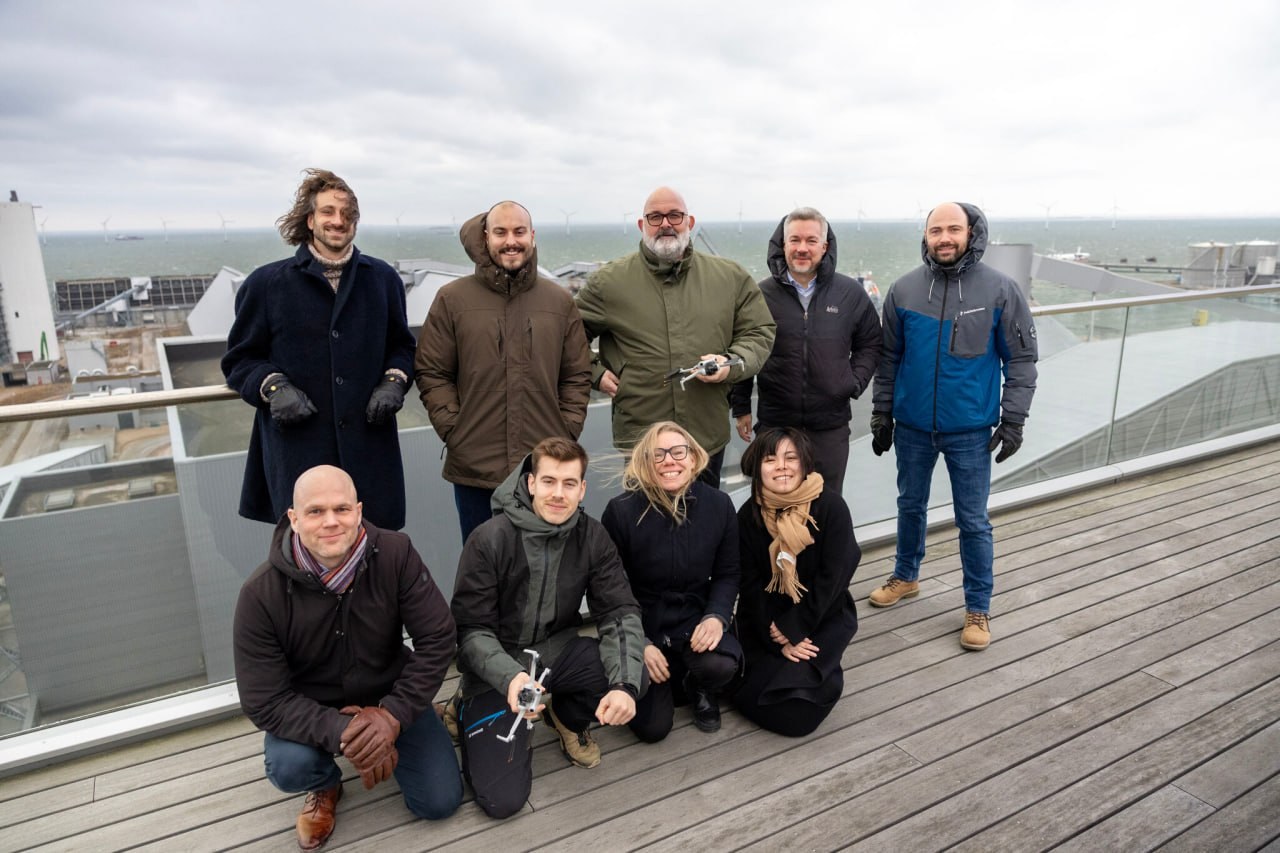
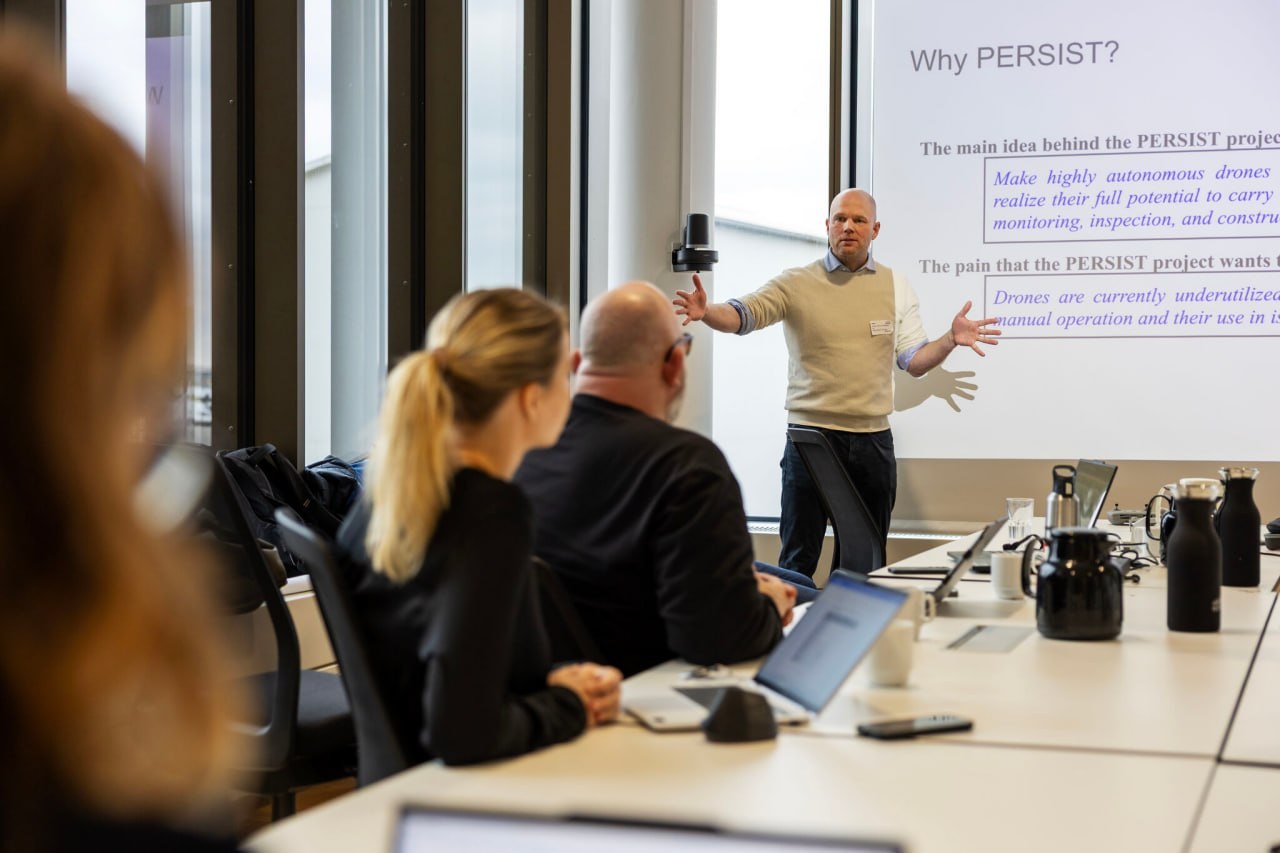
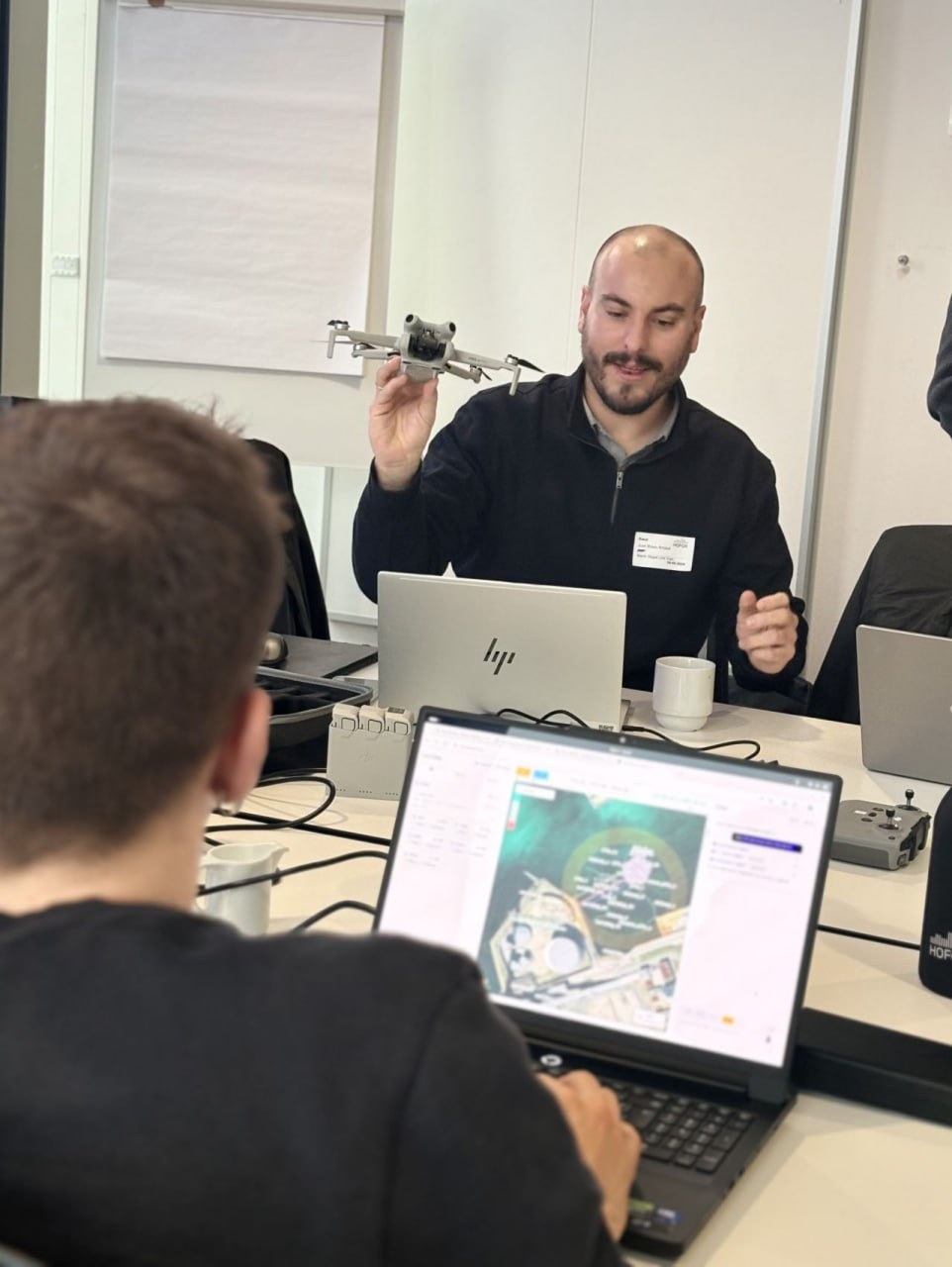
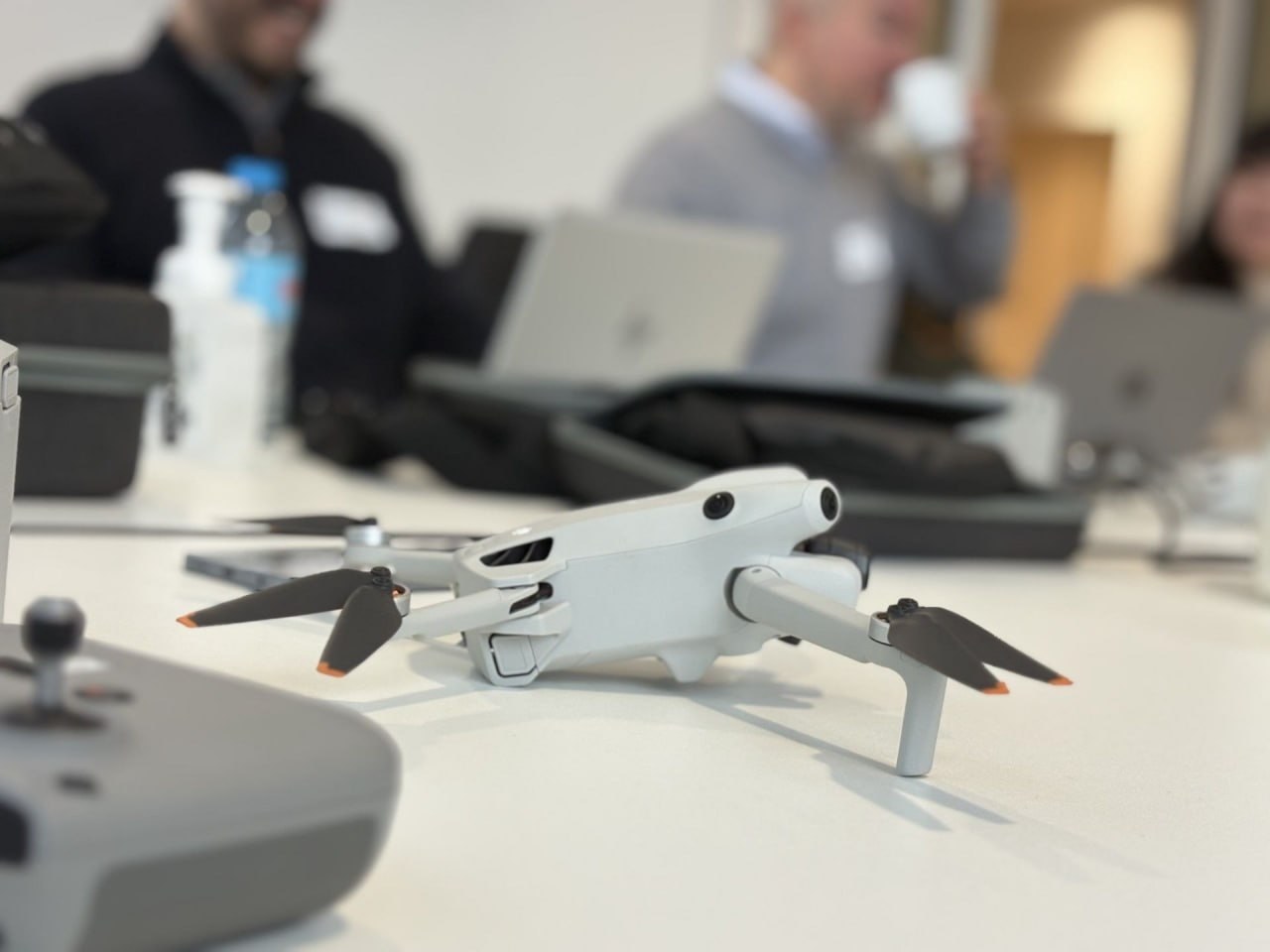



This ambitious collaboration aims to strengthen the quality and security of Denmark’s critical infrastructure through cutting-edge autonomous drone technology and artificial intelligence 🤖🛸. As plant manager Jens Erik Norlander Stein puts it:
“We should not be afraid to be a first-mover — and we could spread it out to the rest of the world.”
🌍 Project impact
High above Denmark’s power plants, autonomous drones equipped with advanced AI keep constant watch. They inspect biomass stockpiles, detect potential fires, and monitor the surrounding area. This vision is becoming reality with PERSIST (Persistent Drone Operations at Critical Infrastructure).
The project showcases how cutting-edge AI research can be transformed into practical solutions that protect people, the environment, and critical infrastructure — while reducing operating costs, enhancing safety, and strengthening a greener, more resilient energy supply. PERSIST also reflects DIREC’s mission to bridge research, industry, and society: advanced technology translated into scalable solutions that make a real difference — precisely where society needs it most.
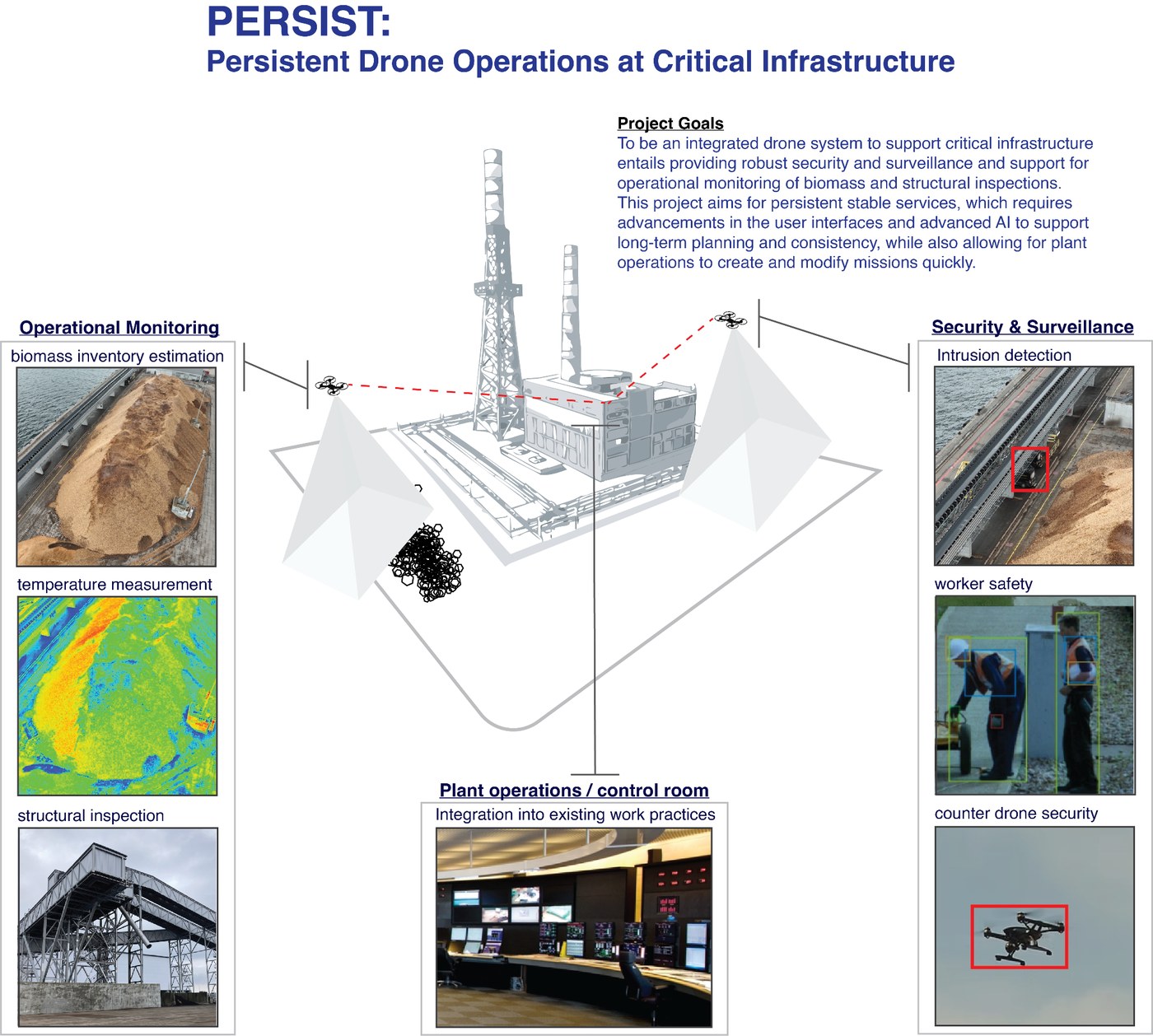
Figure 1 — PERSIST project overview: one integrated drone system covering operational monitoring (biomass inventory, temperature, inspection), security and surveillance (intrusion, PPE, counter-drone), feeding into the plant control room.
🔍 About the technology
The technology is based on edge AI, enabling drones to process data locally — rapidly and with high precision:
- Measure biomass volumes using on-board computer vision across expansive storage facilities and fuel yards.
- Detect intrusions and perimeter anomalies in real time, with the potential to flag fires before they spread.
- Coordinate multi-drone fleets with multi-drone algorithms that assign tasks across teams in real time.
- Perform complex missions directed with a simple natural-language prompt thanks to large language models.
Through workshops, field trials, and co-design, researchers and industry partners share a common mission: to develop solutions that can be seamlessly integrated into daily operations.
The vision is a single, integrated drone system as an essential component of the plant — operating in a largely autonomous manner thanks to three kinds of AI: task-specific edge AI (onboard vision for positioning, biomass estimation and people/intruder detection, building on Robotto’s edge-AI stack), multi-drone coordination (safe and correct task execution, building on the HERD project’s results), and LLM-assisted human–drone interaction (natural-language and map-based interfaces that reduce cognitive load). The project targets a TRL6 technology demonstration (system demonstrated in a relevant environment) and specialises the foundations into three concrete tasks: periodic inspection (cracks, corrosion, fatigue on buildings, chimneys and silos), biomass estimation and thermal monitoring, and autonomous security patrols (perimeter, equipment verification, threat assessment and counter-drone monitoring).
🔥 Why it matters
Denmark’s biomass power plants store more than 30,000 tons of organic fuel, and temperature in the piles is currently measured once per week by a manually piloted drone. That gap has real consequences: a fire like the one at Studstrupværket in 2022, or a reserve running low, can mean financial penalties of up to €6.7M per hour depending on the energy market — and oversupply has to be stored off site at a cost of around €150k. As we have recently shown, the fuel inventory can be estimated accurately from aerial footage — photogrammetric 3D reconstruction and thermal hotspot detection included:
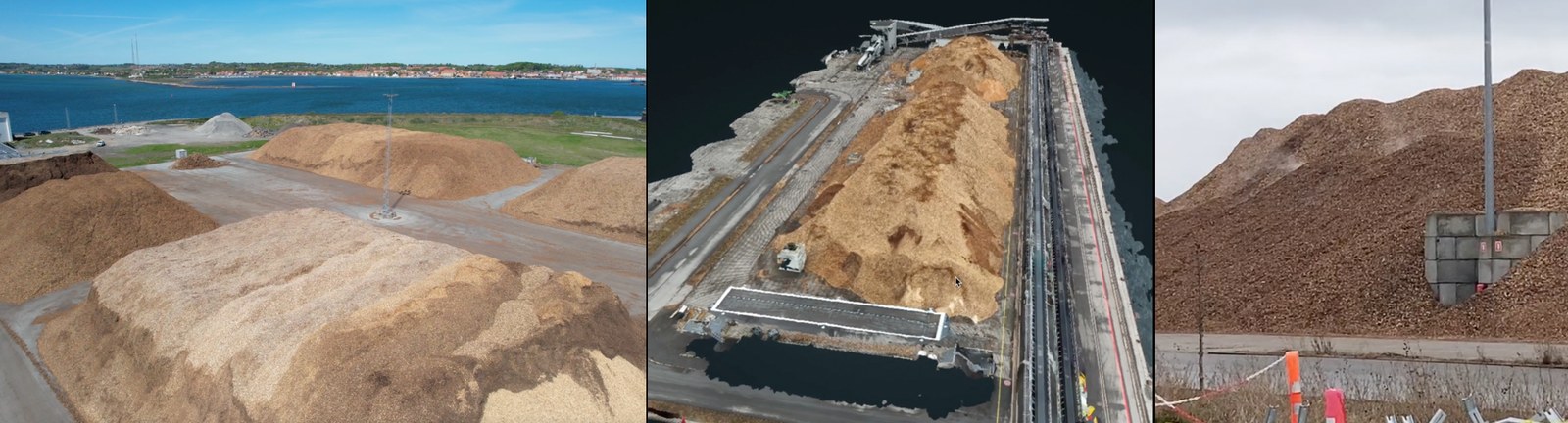
Figure 2 — (left) biomass stockpiles; (center) 3D model from drone imagery; (right) hotspot detection of biomass fuel.
Security is the second driver: static CCTV has limited fields of view and is vulnerable to smoke, fog and sabotage, while EU directives (NIS2, CER) push operators toward resilient, continually monitored infrastructure. The two end-user partners host the validation campaigns — Amagerværket (HOFOR, Copenhagen) and Asnæsværket (Ørsted, Kalundborg):
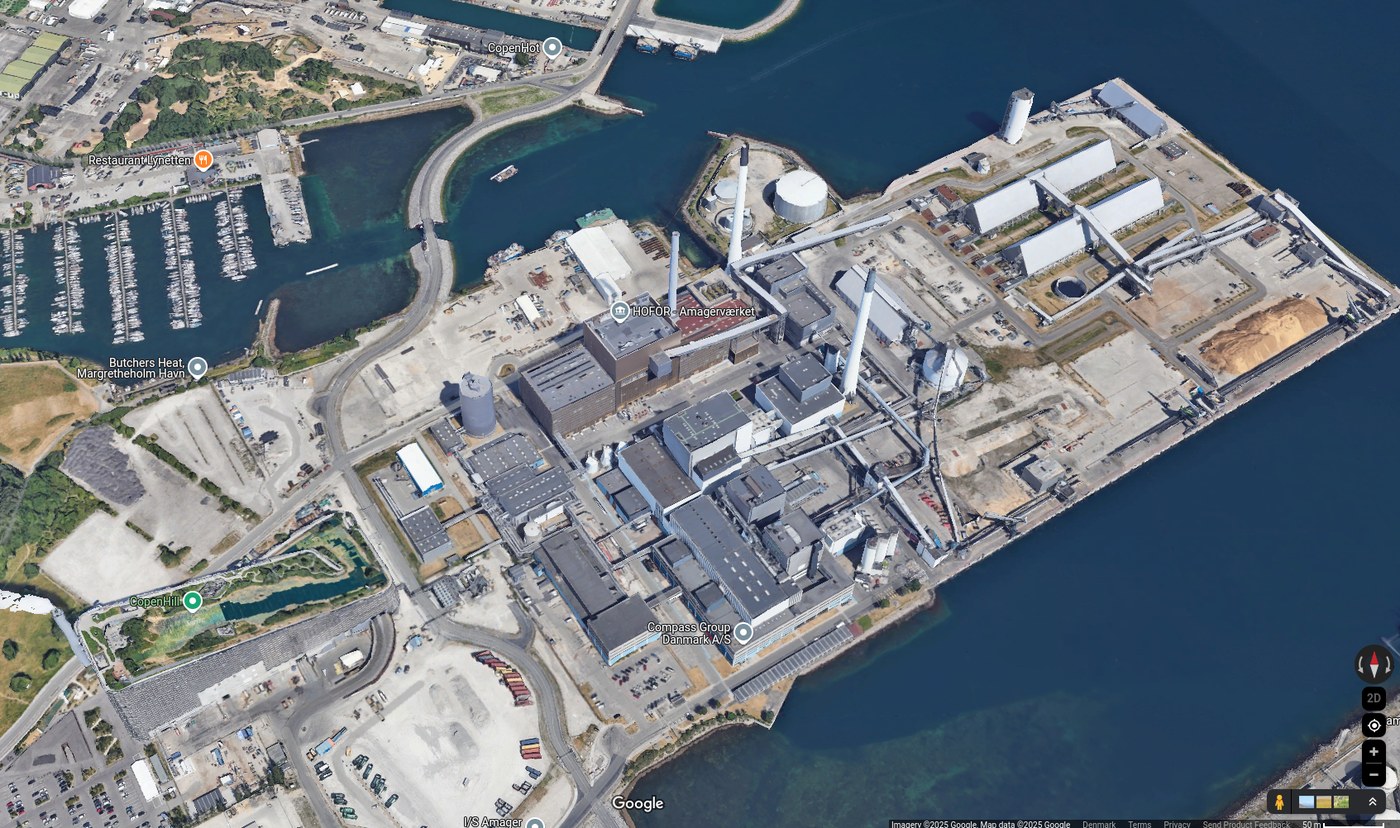
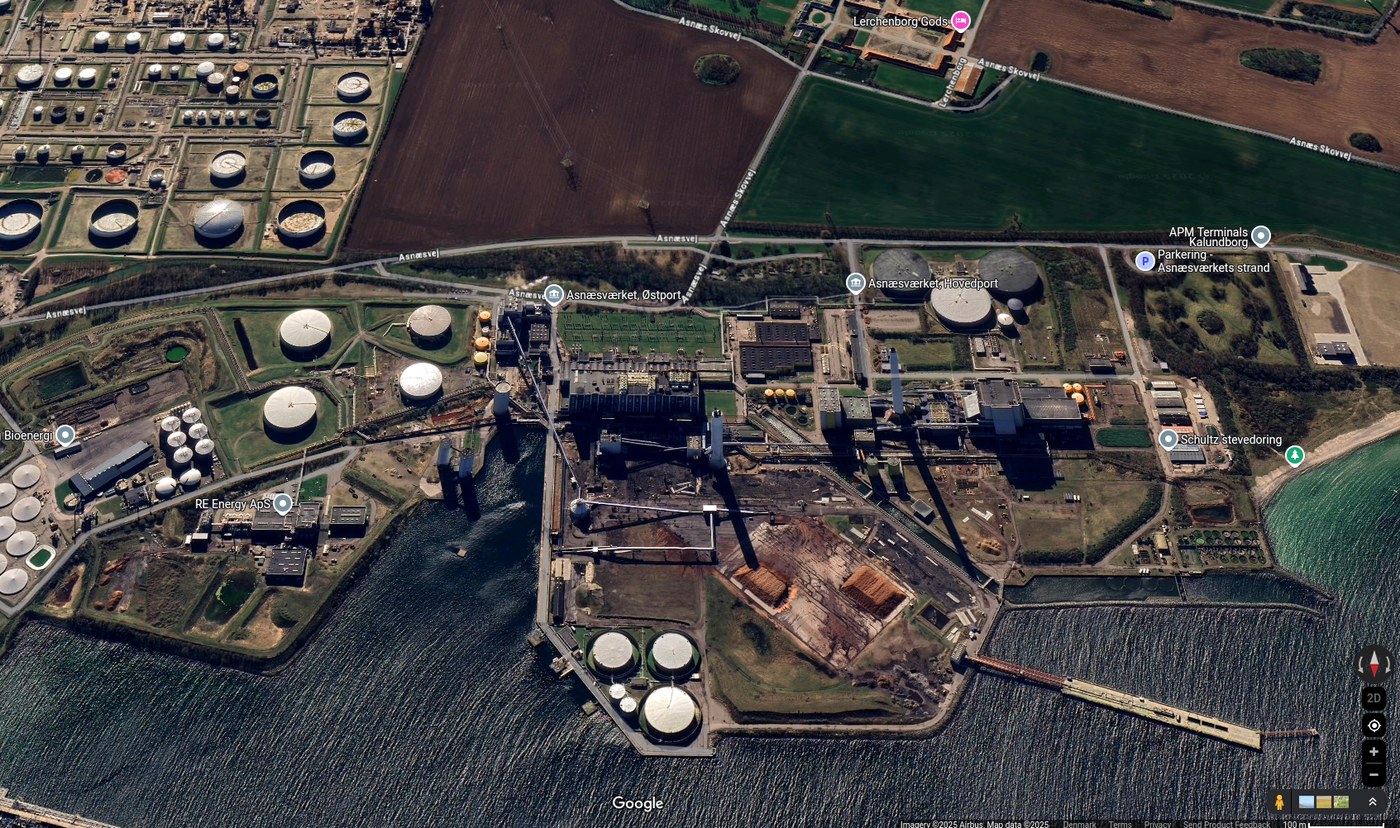
Figure 3 — the two validation sites: Amagerværket (HOFOR, Copenhagen) and Asnæsværket (Ørsted, Kalundborg).
A prototype of the surveillance concept already exists — see the video from the proposal:
Overview of security and surveillance tasks (proposal video).
🤝 Project data & participants
- Project name: PERSIST — Persistent Drone Operations at Critical Infrastructure
- Project period: 2025–2027
- Funding: DKK 3,960,000
Project participants:
- Anders Lyhne Christensen – Professor – University of Southern Denmark
- Timothy Robert Merritt – Aalborg University
- Jens Kai Holm – Chief Specialist – Ørsted Bioenergy and Thermal Power A/S
- Kenneth Geipel – CEO – Robotto Co ApS
- Maja Yhde – Head of Strategic Sustainability & Innovation – HOFOR A/S
👨🔬 Leading the research
The research side of PERSIST is led at the SDU UAS Center (Maersk Mc-Kinney Møller Institute) by Juan Bravo-Arrabal — postdoctoral researcher specialising in software for heterogeneous robotic systems (UGVs, UAVs and mobile manipulators) in emergency and catastrophic scenarios, bridging wireless communications and robotics. Dominik Weikert — postdoctoral researcher at Aalborg University — also works on PERSIST as part of the project’s research team — together they fill the two postdoctoral positions defined in the proposal: Postdoc #1@SDU (onboard AI for autonomy and multi-drone planning and control, led by Juan) and Postdoc #2@AAU (LLM-assisted human–multi-drone interaction, led by Dominik). I (Alejandro Jarabo-Peñas) work closely with them on PERSIST: the project is being built on top of Swarm-Steward — our natural-language multi-robot coordination system and a direct result of the ongoing NAMUR project — so the PERSIST drones inherit the same intent-to-control pipeline, closed-loop safety gates and heterogeneous air–ground teaming validated in our ICUAS 2026 paper.
💬 What the partners say
HOFOR sees persistent aerial monitoring as a natural extension of our strategy to leverage digital technologies for improving plant efficiency and operational resilience, in line with the EU directive on Critical Infrastructure Resilience. Participating in the PERSIST project directly supports our strategic goal of becoming a smarter, more sustainable utility operator.
Maja Yhde — Head of Strategic Sustainability & Innovation, HOFOR ApS
Robotto builds edge-AI drone systems for time-critical missions – search-and-rescue, wildlife protection, and security. PERSIST gives us a unique opportunity to push that technology from single flights to a fully autonomous, multi-drone service that can patrol biomass power plants around the clock. Working side-by-side with HOFOR, Ørsted, and academic experts allows us to refine on-board threat detection, object recognition, and automated task execution under real industrial constraints.
Kenneth Geipel — Chief Commercial Officer, Robotto Co ApS
Persistent aerial monitoring aligns with Ørsted’s strategy of utilizing digital technologies to improve plant efficiency, upholding our commitment to cybersecurity (e.g. N1S2), and positions the power plant to respond to threats to operational continuity as required by the EU directive on Critical Infrastructure Resilience. Participating in PERSIST therefore accelerates our transition to a smarter, greener utility company and the lessons learned in this project can inform similar installations at our other sites.
Jens Kai Holm — Chief Specialist, Ørsted Bioenergy and Thermal Power A/S
PERSIST: Persistent Drone Operations at Critical Infrastructure
SDU · Aalborg University · HOFOR · Ørsted · Robotto.ai · DIREC
Full project page on DIREC.dk · Watch the kickoff video on LinkedIn
PERSIST is supported by the Innovation Fund Denmark through the Digital Research Centre Denmark (DIREC).